










20 min read Qwant: The Search Engine That Values You as a User, Not as a Product
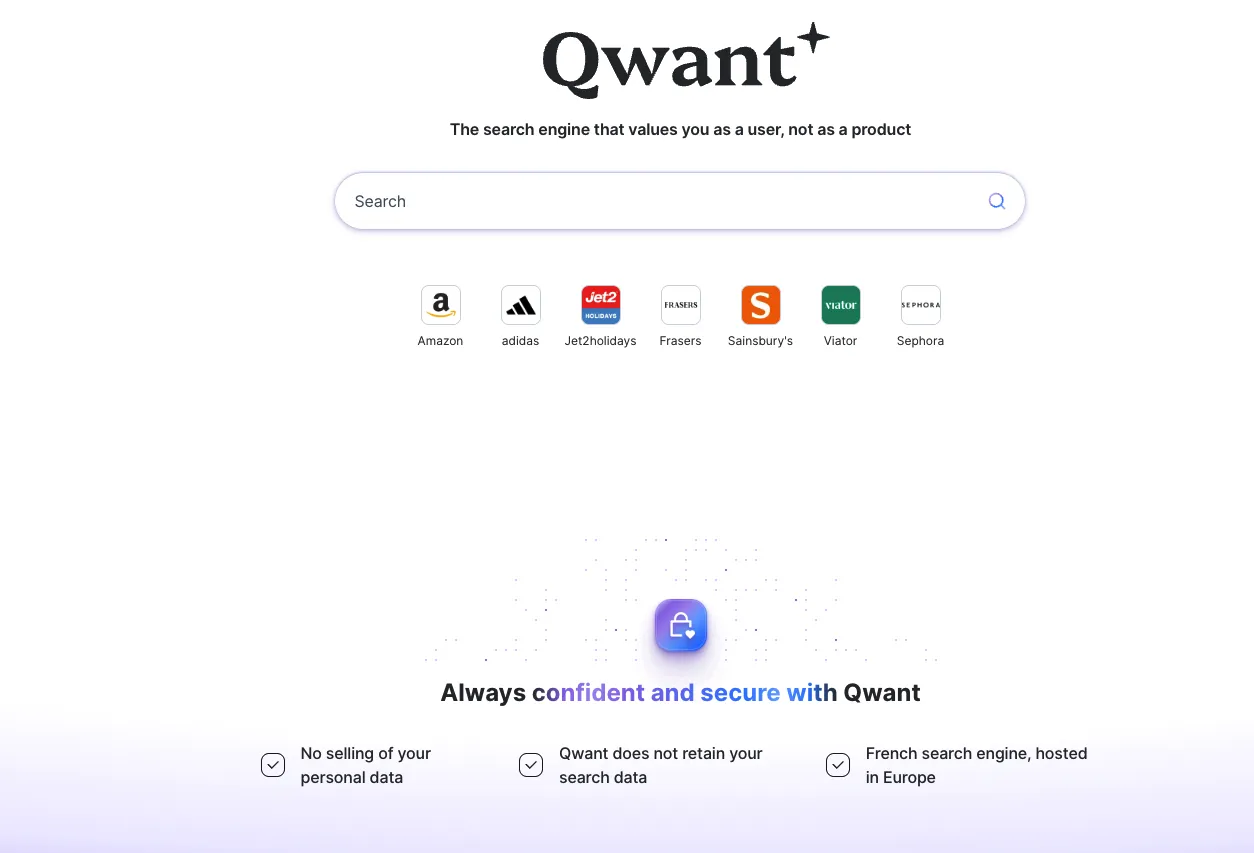
The internet has become an essential part of daily life. Whether people are looking for information, shopping online, reading news, learning new skills, or connecting with others, search engines are often the starting point.
For years, most internet users have relied on a handful of major search engines to navigate the web. While these platforms provide fast and relevant results, they often come with a hidden cost: personal data collection.
Every search, click, location, preference, and browsing habit can be tracked, analyzed, and monetized. In many cases, users unknowingly become products whose data fuels advertising networks worth billions of dollars.
This growing concern has led many people to seek alternatives that prioritize privacy rather than profit. One of the most recognized solutions is Qwant.
Qwant is a privacy-focused search engine that aims to provide high-quality search results without tracking users, building advertising profiles, or selling personal information.
Its mission is simple:
The user should remain the customer, not the product.
As concerns about digital privacy continue to rise worldwide, Qwant has emerged as one of the most respected alternatives to traditional search engines.
This comprehensive guide explores everything you need to know about Qwant, how it works, why it matters, and how it is changing the future of online search.
What Is Qwant?
Qwant is a privacy-oriented search engine designed to help users search the web without sacrificing their personal information.
Unlike many major search providers, Qwant does not create behavioral profiles based on search activity.
Instead, it focuses on delivering relevant results while respecting user privacy.
Key characteristics of Qwant include:
- No tracking of search activity
- No personal profiling
- No sale of user data
- Neutral search results
- Strong privacy protections
- European privacy standards
- Secure browsing experience
Qwant positions itself as a modern moteur de recherche (French for search engine) that places ethics and privacy at the center of its operations.
The platform serves millions of users worldwide and has become particularly popular among individuals concerned about data protection.
The Story Behind Qwant
The origins of Qwant are closely tied to growing concerns about online privacy.
The company was founded in France with the goal of creating a search engine that could compete with major technology companies while maintaining respect for user rights.
At a time when discussions about surveillance, targeted advertising, and data collection were becoming more prominent, Qwant introduced a different approach.
Rather than building detailed user profiles, Qwant focused on:
- Protecting anonymity
- Ensuring transparency
- Promoting digital freedom
- Supporting European data values
The founders believed users should have access to a search engine that respects privacy without compromising search quality.
This vision helped establish Qwant as one of Europe's most recognized privacy-focused technology platforms.
Why Privacy Matters in Search
Many people underestimate how much information a search engine can learn about them.
Consider the types of searches users perform every day:
- Medical questions
- Financial research
- Career planning
- Travel arrangements
- Family matters
- Political interests
- Educational topics
- Personal concerns
Taken together, these searches can reveal an incredibly detailed picture of someone's life.
Search histories can indicate:
- Income level
- Health status
- Relationships
- Religious interests
- Political opinions
- Consumer habits
- Geographic location
- Future plans
This information becomes valuable when collected at scale.
Many advertising systems rely on extensive user profiles to deliver highly targeted advertisements.
While personalized advertising may seem convenient, it often requires continuous surveillance of online behavior.
Qwant challenges this model by arguing that users should not have to trade privacy for functionality.
How Traditional Search Engines Use Your Data
To understand why Qwant matters, it helps to understand how many conventional search engines operate.
Typically, user information may be collected through:
Search Queries
Every search can be stored and analyzed.
Click Behavior
Search engines may track which results users click.
Device Information
Details about computers, phones, and tablets can be recorded.
Location Data
GPS information and IP addresses may reveal user locations.
Browser Fingerprinting
Unique device characteristics can be used to identify users.
Advertising Profiles
Data can be combined to create detailed consumer profiles.
These profiles help advertisers reach specific audiences with highly targeted campaigns.
The trade-off is that user privacy becomes increasingly limited.
Qwant seeks to eliminate this trade-off.
Qwant's Privacy-First Philosophy
Privacy is not merely a feature of Qwant.
It is the foundation of the entire platform.
Qwant's philosophy is built around several principles.
No Tracking
Qwant does not track users across the internet.
No Behavioral Profiling
Search histories are not used to create advertising profiles.
No Personal Data Sales
User information is not sold to third parties.
Search Neutrality
Results are not excessively personalized based on user history.
Transparency
Users know how their information is handled.
This approach allows people to search freely without feeling monitored.
Many users find this creates a more comfortable and trustworthy online experience.
How Qwant Works
At first glance, Qwant operates similarly to any other search engine.
Users enter a query, press search, and receive results.
Behind the scenes, however, significant differences exist.
Qwant's infrastructure is designed to minimize data collection while still delivering relevant information.
The search process generally includes:
Query Processing
The platform interprets user requests.
Search Index Retrieval
Relevant content is identified.
Ranking Systems
Algorithms determine the most useful results.
Result Presentation
Information is displayed clearly and efficiently.
The crucial distinction is that user-specific tracking is not required to perform these functions.
Core Features of Qwant
Several features distinguish Qwant from traditional search engines.
Privacy Protection
The most notable feature is its commitment to privacy.
Users can search without extensive monitoring.
Clean User Interface
Qwant offers a simple and intuitive design.
The interface is easy to navigate for both beginners and experienced users.
Fast Results
Search performance is optimized to provide quick responses.
News Integration
Users can access current news directly from search results.
Image Search
Visual content can be explored efficiently.
Video Search
Video content is organized and accessible.
Shopping Search
Users can compare products through dedicated shopping features.
Mobile Compatibility
Qwant works effectively across smartphones, tablets, and desktops.
Qwant Search Categories
Qwant organizes information into several categories to improve usability.
Web Search
General internet results.
News Search
Current events and breaking stories.
Images
Photographs, graphics, and visual media.
Videos
Video content from multiple platforms.
Shopping
Products and purchasing options.
Social Content
Public social media information.
This categorization allows users to find information quickly and efficiently.
Qwant Images: Visual Discovery Without Tracking
Image search has become an essential part of modern web browsing.
Students, marketers, designers, researchers, and everyday users frequently rely on visual content.
Qwant offers image search functionality that emphasizes privacy.
Benefits include:
- High-quality image results
- Fast browsing
- Privacy protection
- Reduced tracking
- User-friendly filtering
Users can explore visual content without contributing to extensive advertising profiles.
Qwant News: Staying Informed Privately
News consumption often reveals personal interests and political preferences.
Many platforms use reading habits to refine advertising profiles.
Qwant provides access to news while minimizing personal data collection.
Advantages include:
- Diverse sources
- Fast updates
- Privacy-conscious browsing
- Simplified navigation
- Reduced profiling
This allows users to stay informed without excessive monitoring.
Video Search on Qwant
Video content dominates modern internet usage.
From educational tutorials to entertainment, video platforms attract billions of users.
Qwant simplifies video discovery by providing:
- Relevant results
- Easy navigation
- Organized categories
- Privacy-oriented search experience
Users can locate useful content while maintaining greater control over their personal information.
Shopping Through Qwant
Online shopping generates valuable consumer data.
Search histories often reveal purchasing intentions before a purchase occurs.
Qwant offers shopping search functionality designed to provide product information while respecting privacy.
Benefits include:
- Product comparisons
- Simplified searches
- Reduced tracking
- Better transparency
- User-focused experience
This approach aligns with Qwant's broader mission of protecting user rights online.
Key Benefits of Using Qwant
Many users switch to Qwant because of its unique advantages.
Better Privacy
Search without extensive surveillance.
Reduced Advertising Profiling
Avoid detailed marketing profiles.
Greater Digital Freedom
Explore topics without constant monitoring.
Neutral Search Experience
Results are less influenced by personal history.
European Data Standards
Benefit from strong privacy principles.
Simplicity
Enjoy a straightforward search interface.
Transparency
Understand how your information is treated.
These benefits have helped Qwant build a loyal user base across multiple countries.
Qwant vs Google
One of the most common comparisons involves Qwant and Google.
While both provide search capabilities, their philosophies differ significantly.
FeatureQwantGoogleUser TrackingMinimalExtensivePersonalized AdsLimitedExtensiveUser ProfilingNoYesPrivacy FocusHighModerateData CollectionMinimalSignificantSearch PersonalizationLimitedHighBusiness ModelPrivacy FirstAdvertising First
Google excels in scale and ecosystem integration.
Qwant focuses on privacy and user protection.
The best choice depends on individual priorities.
For privacy-conscious users, Qwant often represents an attractive alternative.
Conclusion of Part 1
Qwant has established itself as one of the most important privacy-focused search engines in the digital world. By rejecting the traditional model of extensive user tracking and behavioral profiling, it offers a refreshing alternative for people who value their online privacy.
As a leading moteur de recherche, Qwant demonstrates that search quality and privacy can coexist. Whether users are searching the web, viewing images, watching videos, reading news, or shopping online, the platform strives to protect personal information while delivering relevant results.
In Part 2, we will explore:
- Qwant Browser (Qwant Navigateur)
- Advanced privacy technologies
- Search algorithms
- Qwant for businesses
- Qwant for students
- Qwant for professionals
- European digital sovereignty
- Security features
- Qwant mobile experience
- Future innovations
Qwant Navigateur: A Privacy-Focused Browsing Experience
As concerns about online surveillance continue to grow, many internet users are looking beyond search engines and paying closer attention to the browsers they use every day.
This is where Qwant Navigateur becomes increasingly relevant.
A browser serves as the gateway to the internet. Every website visited, every search performed, and every online interaction passes through a browser. While many browsers provide convenience and speed, some also collect substantial amounts of user information.
Qwant's approach is different.
The goal of Qwant navigateur is to create a browsing environment that complements the privacy-first philosophy of the Qwant search engine.
Key objectives include:
- Enhanced user privacy
- Reduced tracking
- Secure browsing
- Faster page loading
- Greater control over personal information
- Better transparency
Instead of treating users as data sources, Qwant aims to provide tools that empower individuals to control their digital footprint.
Understanding the Privacy Ecosystem
Qwant is more than a simple search engine.
It is part of a broader movement advocating for a healthier and more ethical internet.
The privacy ecosystem surrounding Qwant includes:
Secure Search
Search without tracking.
Safe Browsing
Protection against invasive monitoring.
Transparent Policies
Clear explanations regarding data usage.
User Control
More authority over personal information.
Digital Independence
Reduced dependence on data-driven advertising models.
Together, these components create an internet experience centered around users rather than advertisers.
Why Browser Privacy Matters
Many users believe that privacy concerns begin and end with search engines.
In reality, browsers often collect significant amounts of information.
Potentially collected data may include:
- Browsing history
- Website interactions
- Search behavior
- Device information
- Location details
- Installed extensions
- Advertising preferences
When combined, this information can create highly detailed digital profiles.
These profiles are often used to:
- Personalize advertisements
- Predict purchasing behavior
- Analyze user interests
- Improve targeting accuracy
Qwant challenges this model by emphasizing privacy at every stage of the browsing experience.
The Rise of Digital Surveillance
The internet was originally envisioned as a decentralized network for sharing information.
Over time, however, many online services adopted business models centered on data collection.
Today, large technology companies can gather information from multiple sources, including:
- Search engines
- Browsers
- Mobile applications
- Social media platforms
- Shopping websites
- Advertising networks
This interconnected ecosystem allows companies to build remarkably detailed profiles.
For example, a person's profile might reveal:
- Shopping habits
- Travel plans
- Health interests
- Career goals
- Entertainment preferences
- Political views
- Financial behavior
Many users are uncomfortable with this level of monitoring.
Qwant exists partly because of this growing concern.
How Qwant Protects User Privacy
Privacy protection is not a marketing slogan for Qwant.
It is built into the platform's operational model.
Key privacy practices include:
No User Profiling
Qwant does not build detailed personal profiles.
Limited Data Collection
Only necessary information is processed.
No Search History Exploitation
Search behavior is not monetized.
Anonymous Searching
Users can explore the web without creating extensive digital records.
Respect for User Rights
Privacy protections remain a central priority.
These measures help create an environment where users can search with confidence.
Search Neutrality and Information Access
One of Qwant's most interesting principles is search neutrality.
Traditional search engines often personalize results based on:
- Previous searches
- Click history
- Location
- Device usage
- Advertising interests
While personalization can sometimes improve relevance, it may also create information bubbles.
A filter bubble occurs when users repeatedly see content that reinforces existing beliefs and interests.
Potential consequences include:
- Reduced exposure to diverse viewpoints
- Narrow information consumption
- Increased confirmation bias
- Less balanced research
Qwant seeks to reduce these effects by limiting excessive personalization.
This promotes broader access to information and encourages independent exploration.
The Importance of Digital Sovereignty
Digital sovereignty has become an increasingly important topic worldwide.
Governments, organizations, and individuals are recognizing the importance of maintaining control over digital infrastructure and data.
As a European search engine, Qwant is often associated with discussions about:
- Data independence
- Technological autonomy
- Privacy protection
- Ethical innovation
- User rights
The platform demonstrates that alternative search ecosystems can thrive while respecting privacy principles.
Qwant and European Values
Europe has become a global leader in privacy regulation.
Laws such as the General Data Protection Regulation (GDPR) have influenced digital privacy practices worldwide.
Qwant aligns closely with these values by emphasizing:
Transparency
Users deserve clear information about data practices.
Accountability
Companies should be responsible for how they handle data.
User Rights
Individuals should maintain control over personal information.
Privacy by Design
Privacy should be built into systems from the beginning.
These principles help distinguish Qwant from many traditional technology platforms.
Advanced Search Capabilities
Privacy does not mean sacrificing functionality.
Qwant offers a variety of advanced search capabilities.
Web Search
Comprehensive access to online content.
News Search
Current events from multiple sources.
Image Search
Visual discovery across the internet.
Video Search
Easy access to video content.
Shopping Search
Product research and comparison.
Trend Exploration
Discovery of emerging topics.
Users can enjoy a modern search experience while maintaining greater privacy.
Search Relevance Without Tracking
A common misconception is that high-quality search results require extensive user tracking.
Qwant challenges this assumption.
The platform uses sophisticated ranking technologies to determine relevance based on:
- Search intent
- Content quality
- Page authority
- Contextual signals
- Technical factors
This approach demonstrates that useful search results can be delivered without invasive surveillance.
Qwant for Students
Students conduct countless searches during their academic journeys.
They research:
- Essays
- Assignments
- Scientific studies
- Historical topics
- Educational resources
- Career opportunities
Qwant offers several advantages for students.
Independent Research
Reduced personalization encourages broader exploration.
Privacy Protection
Academic interests remain private.
Diverse Perspectives
Users may encounter a wider range of viewpoints.
Safer Learning Environment
Search activity is less likely to contribute to advertising profiles.
For students seeking knowledge rather than targeted advertisements, Qwant presents a compelling option.
Qwant for Researchers
Researchers often require unbiased access to information.
Excessive personalization can potentially influence discovery processes.
Benefits for researchers include:
- Broader search exposure
- Less behavioral influence
- Privacy protection
- Transparent search practices
- Improved information diversity
Whether conducting academic, professional, or personal research, users may appreciate a less personalized environment.
Qwant for Journalists
Journalists frequently investigate sensitive topics.
Privacy becomes especially important when researching:
- Political issues
- Corporate activities
- Legal matters
- Social movements
- International events
Qwant's privacy-focused model can help journalists maintain greater confidentiality during research activities.
Qwant for Businesses
Businesses also benefit from privacy-focused search tools.
Organizations increasingly prioritize:
- Data protection
- Cybersecurity
- Employee privacy
- Regulatory compliance
Using privacy-conscious tools can support these objectives.
Potential advantages include:
- Reduced exposure to tracking systems
- Enhanced privacy awareness
- Better security practices
- Alignment with data protection goals
Qwant and Cybersecurity
Privacy and cybersecurity often overlap.
Although they are not identical concepts, both contribute to safer online experiences.
Cybersecurity focuses on protecting systems from threats such as:
- Malware
- Phishing attacks
- Data breaches
- Unauthorized access
Privacy focuses on controlling personal information.
Qwant contributes to a safer digital environment by minimizing unnecessary data collection.
The less data collected, the less data can potentially be exposed.
Why Data Minimization Matters
Data minimization is a key privacy principle.
The idea is simple:
Collect only the information that is genuinely necessary.
Benefits include:
Reduced Risk
Less stored data means fewer opportunities for breaches.
Better Privacy
Users retain greater control.
Improved Trust
Organizations demonstrate respect for user rights.
Regulatory Alignment
Supports modern privacy standards.
Qwant incorporates data minimization into its operational philosophy.
Mobile Search and Qwant
Modern internet usage increasingly occurs on mobile devices.
Smartphones have become the primary gateway to information for billions of people.
Qwant provides a mobile-friendly experience featuring:
- Fast loading speeds
- Responsive design
- Privacy protections
- Easy navigation
- Consistent search quality
Whether using Android or iOS devices, users can access Qwant's search services conveniently.
The Growth of Privacy-Conscious Consumers
Consumer attitudes toward privacy have changed dramatically over the past decade.
People are becoming more aware of:
- Tracking technologies
- Data collection practices
- Advertising networks
- Privacy risks
- Digital rights
As awareness grows, demand for alternatives continues to increase.
Qwant benefits from this trend because its mission directly addresses these concerns.
Ethical Technology and Qwant
Ethical technology focuses on creating products that serve users responsibly.
Core principles often include:
- Transparency
- Fairness
- Accountability
- Privacy
- User empowerment
Qwant aligns with many of these principles.
Its business model seeks to balance functionality with respect for individual rights.
This ethical approach resonates with users seeking alternatives to surveillance-driven platforms.
Common Myths About Privacy Search Engines
Several misconceptions surround privacy-focused search engines.
Myth 1: Privacy Search Engines Deliver Poor Results
Reality: Modern privacy search engines provide highly relevant information.
Myth 2: Only Experts Need Privacy
Reality: Everyone benefits from privacy protections.
Myth 3: Privacy Means Sacrificing Convenience
Reality: Qwant demonstrates that privacy and usability can coexist.
Myth 4: Data Collection Is Necessary for Search
Reality: Relevant search results can be delivered without extensive profiling.
Understanding these realities helps users make more informed decisions.
Building a Better Internet
Qwant's broader mission extends beyond search.
The company advocates for a healthier internet ecosystem where:
- Users maintain control
- Privacy is respected
- Information remains accessible
- Innovation continues responsibly
- Trust is prioritized
This vision reflects growing public demand for more ethical technology.
Looking Ahead: The Future of Qwant
The future of search is likely to be influenced by several major trends:
Artificial Intelligence
AI-powered search experiences will continue evolving.
Privacy Expectations
Users will demand stronger protections.
Regulatory Changes
Governments may introduce stricter privacy requirements.
Digital Sovereignty
Regional technology ecosystems may expand.
User Empowerment
People will seek greater control over personal data.
Qwant is well positioned to participate in these developments due to its privacy-first foundation.