










9 min read How to Price Your Freelance Services Effectively
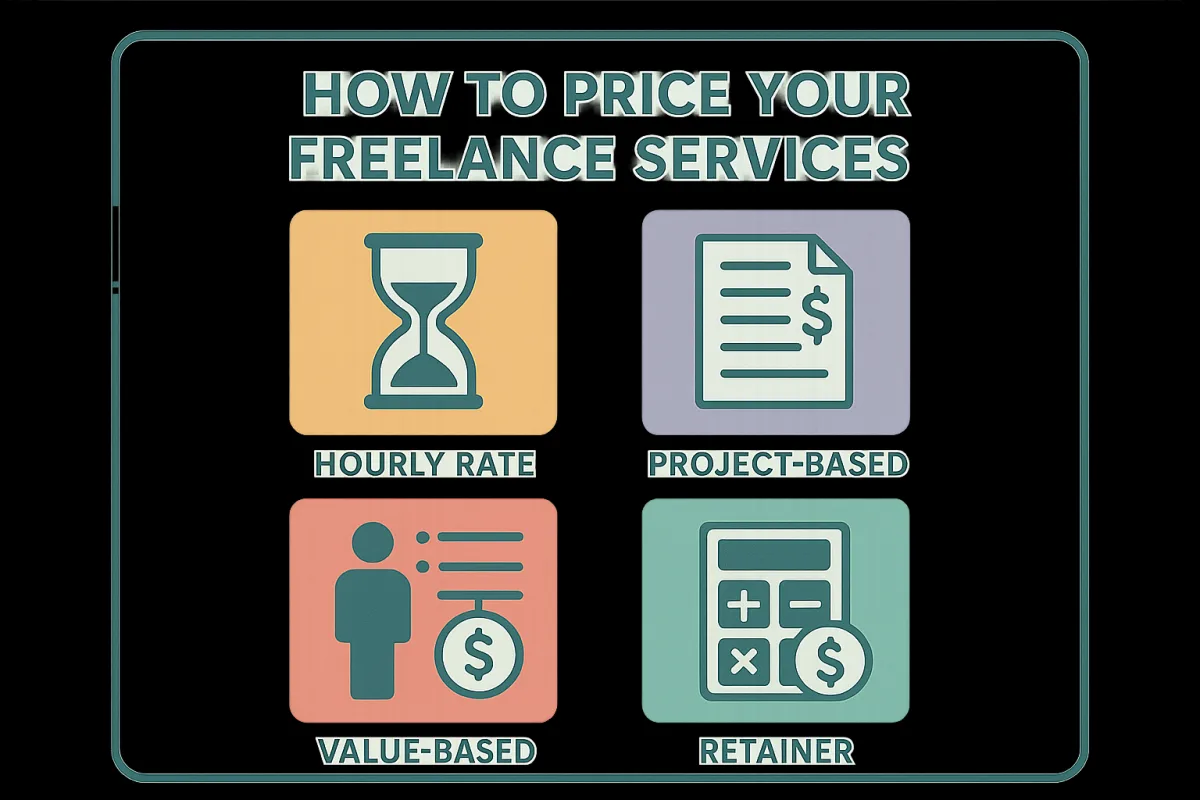
To effectively price your freelance services, start by understanding the value you bring to your clients. Research what others in your field are charging, but remember that your unique skills and experience can justify a higher rate. Consider using a tiered pricing model, where you offer different packages based on the complexity of the project and the level of service provided. This approach not only helps clients choose a package that fits their budget but also highlights the value of premium services.
Additionally, factor in your costs such as tools, software, and any overhead expenses, and don’t forget to account for time spent on administrative tasks. Setting an hourly rate is common, but you might also consider project-based pricing, especially for larger projects where the scope is clearly defined. Lastly, be open to negotiation, but have a minimum rate in mind that reflects your worth. Regularly reassess your pricing strategy as you gain experience and your skill set evolves.
Understanding Your Market
To price your freelance services effectively, it is crucial to have a thorough understanding of your market. This involves researching industry standards, analyzing your competitors, and taking regional pricing differences into account. According to a survey conducted by Freelancers Union, 60% of freelancers feel they lack adequate information on what to charge, which can lead to underpricing or overpricing their services.
Research Industry Standards
Start by researching the typical pricing structures in your niche. For example, graphic designers may charge anywhere from $25 to $150 per hour depending on their experience and the complexity of the project. Websites like Glassdoor or PayScale can provide insights into average rates for various freelance professions.
- Identify the average hourly rate for your niche.
- Look at project-based pricing and retainers.
- Check platforms like Upwork or Fiverr to see what others in your field are charging.
Next, analyze your competitors' rates. This will help you position yourself competitively. If most freelancers in your area are charging $75 per hour, but you have more experience or a unique skill set, you might justify charging $90. Finally, remember to consider regional pricing differences, as rates can vary significantly based on location. For example, a web developer in San Francisco may charge $150 per hour, while one in a smaller town may only charge $75.
How to Price Your Freelance Services
Determining the right pricing strategy for your freelance services is crucial for your success. Start by calculating your hourly rate based on your skills and experience. A common method is to consider your desired annual salary, divide it by the number of billable hours you plan to work, and then add a margin for overhead costs. For instance, if you want to earn $60,000 a year and expect to bill 1,200 hours, your hourly rate would be $50.
Consider Project-Based Pricing
Project-based pricing can offer a more predictable income stream, especially for larger projects. To set a project rate, estimate how many hours the project will take, multiply that by your hourly rate, and adjust based on the complexity of the work and client budget. For example, if a project is expected to take 30 hours, and your hourly rate is $50, you might start at $1,500 but consider raising it to $2,000 if the project scope is particularly demanding.
Another effective strategy is evaluating value-based pricing. This approach aligns your fees with the value you bring to your client. For instance, if your work can save a client $10,000, charging $2,000 for the project can be seen as a bargain. Always communicate the return on investment to justify your pricing.
- Calculate your ideal hourly rate.
- Assess project scope for project-based pricing.
- Align fees with the value provided to clients.
Calculating Your Costs
To effectively price your freelance services, the first step is to calculate your costs. This involves listing all your business expenses to establish a baseline for your pricing strategy. Your expenses might include:
- Software subscriptions (e.g., Adobe Creative Cloud, project management tools)
- Office supplies (e.g., notebooks, printer ink)
- Utilities (e.g., internet, phone)
- Marketing costs (e.g., website hosting, advertising)
- Professional development (e.g., courses, workshops)
Once you have a comprehensive list of your fixed costs, it’s essential to account for taxes and savings in your pricing strategy. For instance, if you aim to save 20% of your income for future investments and expect to pay 15% in taxes, you need to factor these into your pricing.
Variable Costs
Additionally, consider the variable costs associated with different projects. These can fluctuate based on project complexity or client demands. For example, if a project requires outsourcing specific tasks, such as graphic design or copywriting, estimate those costs and incorporate them into your overall pricing. Understanding both fixed and variable costs will help you set rates that not only cover your expenses but also provide a reasonable profit margin.
For further insights, you can explore more resources on effective pricing strategies at ….
Communicating Your Value
Effectively communicating your value as a freelancer is essential to justifying your pricing. It’s not only about what you do, but how well you can convey the unique benefits you offer to potential clients. Start by developing a strong portfolio that showcases your best work. Aim for a diverse range of projects that highlight your skills and adaptability. For instance, if you’re a graphic designer, include branding, print, and digital work to appeal to a wider audience.
Articulating Your Unique Selling Points
Being able to articulate your unique selling points (USPs) is crucial. Identify what sets you apart from competitors. This could be your specialized skills, years of experience, or a unique approach to problem-solving. For example, if you have a decade of experience in SEO and can demonstrate increased traffic for past clients, make this a focal point in your pitch.
In addition to your portfolio and USPs, leverage testimonials and case studies as evidence of your value. Consider the following:
- Gather at least five testimonials from satisfied clients.
- Develop two or three detailed case studies showcasing your work process and results.
- Make sure to include metrics — for example, "Increased client sales by 30% in three months."
By effectively communicating your value, you can not only justify your rates but also build long-lasting relationships with clients.
Adjusting Your Rates
As a freelancer, it's crucial to regularly review and adjust your rates to reflect your growing experience and the current demand for your services. Over time, as you develop your skills and build a portfolio, you should not hesitate to increase your rates. For instance, if you started charging $50 per hour, consider raising it to $75 after two years of experience and a solid client base.
Offering Discounts
While raising your rates is important, you can also consider offering discounts to long-term clients or for larger projects. This strategy can encourage repeat business and help you maintain a steady income. For example, you might offer a 10% discount for clients who commit to a year-long contract or a 15% discount for projects exceeding $5,000. Ensure you communicate these discounts clearly to your clients.
- Review your rates every 6 months.
- Evaluate your skill set and the market demand.
- Communicate with clients about your rate changes.
- Know your minimum acceptable rate to avoid undervaluing your work.
Being open to negotiations can also be beneficial. However, always be aware of your minimum acceptable rate—this is the lowest amount you can accept without compromising your financial stability. For example, if your minimum is $40 per hour, ensure that any negotiated rate stays above this threshold to maintain your profitability.
Handling Client Objections
As a freelancer, encountering client objections regarding pricing is a common challenge. Understanding how to effectively handle these objections can make a significant difference in closing deals and maintaining your value. Preparation is key; anticipate common objections and have well-thought-out responses ready. For instance, if a client says your rates are too high, you can explain the value of your services by highlighting your experience, specialized skills, and the outcomes you deliver.
Effective Negotiation Techniques
Negotiation is an art that requires practice and strategy. Start by establishing a clear understanding of your worth, supported by market research. Consider the following steps when negotiating:
- Research industry standards to understand what others charge for similar services.
- Clearly outline the benefits and ROI your services provide to the client.
- Be prepared to offer tiered pricing options to accommodate varying budgets.
- Maintain a collaborative tone, inviting the client to share their budget constraints.
- Don’t rush the conversation; allow for pauses and reflections to gauge their responses.
Remember, maintaining confidence in your pricing is essential. When you present your rates with assurance, it conveys professionalism and establishes respect for your expertise. Clients are more likely to agree to your terms if they sense your confidence in the value you bring to the table.
Staying Competitive in the Freelance Market
In the rapidly evolving freelance landscape, staying competitive is crucial for success. One effective way to maintain your edge is by continuously updating your skills and services to align with market demands. Consider enrolling in online courses or attending workshops that focus on emerging trends relevant to your field. For instance, if you are a graphic designer, learning about the latest design software or techniques can keep your portfolio fresh and appealing to clients.
Networking with Other Freelancers
Networking is another vital component of staying competitive. By connecting with fellow freelancers, you can share insights, strategies, and even client referrals. Join online forums, social media groups, or local meetups to foster these relationships. For example, participating in a professional group on LinkedIn can provide you with valuable discussions about pricing strategies and client management.
- Attend industry conferences.
- Engage in local freelancer meetups.
- Utilize social media platforms to build connections.
Finally, it's essential to stay informed about industry trends that may impact your pricing. Regularly read industry publications, follow relevant blogs, and subscribe to newsletters. Being aware of market shifts can help you adjust your rates accordingly, ensuring that you remain competitive while reflecting the value of your services.