










9 min read Freelance vs Agency: Which is Right for Your Business?
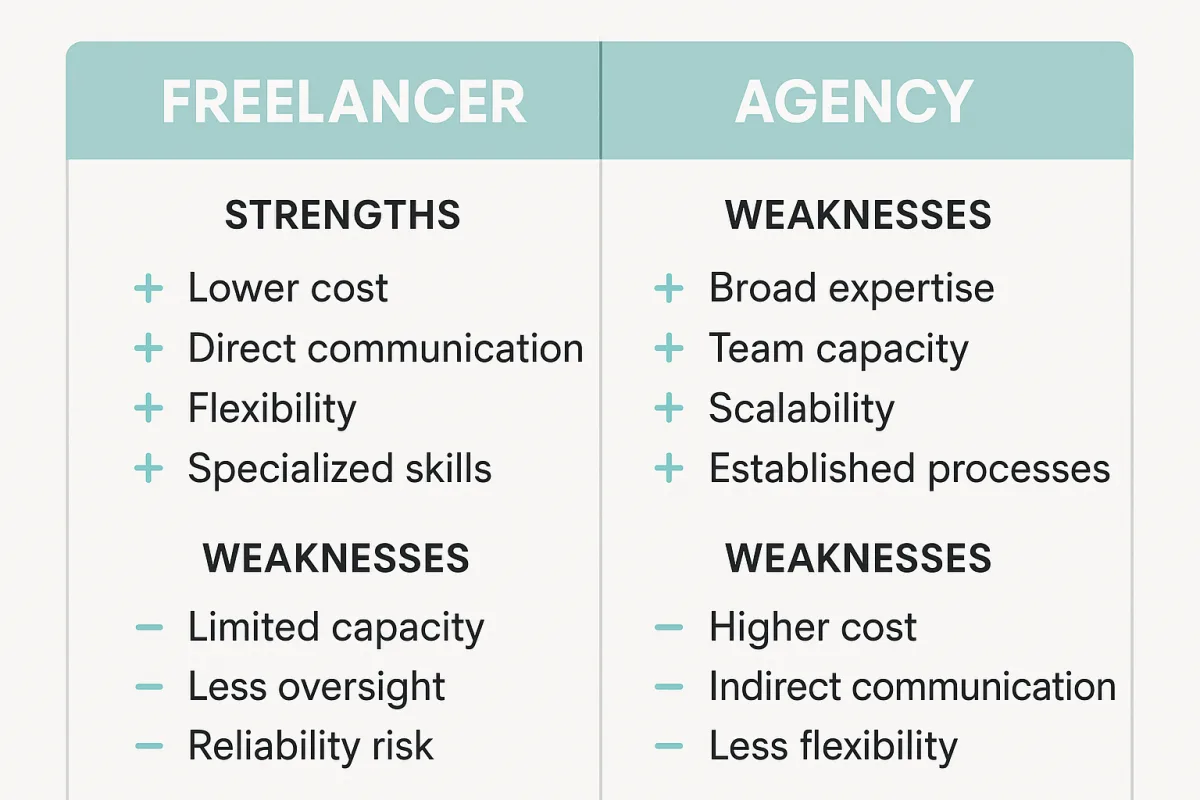
When it comes to choosing between freelance vs agency for your business, making the right decision can significantly impact your project's success. Freelancers often provide specialized skills at a lower cost, allowing for flexibility and direct communication. This can be ideal for smaller projects or startups looking to stretch their budgets while still accessing talent.
On the other hand, agencies usually come with a team of professionals and a structured process, which can enhance project management and deliver a more comprehensive service. They may be suited for larger projects that require diverse skill sets and ongoing support.
Understanding your project’s needs, budget constraints, and timeline will help you determine which option is best. If you need quick turnaround and personalized attention, a freelancer might be your best bet. However, if you’re looking for reliability and a broader range of services, an agency could be the way to go. Assessing these factors will lead you to the right choice for your business.
Understanding Freelance vs Agency Dynamics
In the ever-evolving landscape of the digital marketplace, understanding the fundamental differences between freelancers and agencies is crucial for businesses looking to optimize their resources. Freelancers are typically independent professionals specializing in a specific skill set, such as graphic design, writing, or programming. On the other hand, agencies are organizations that provide a broader range of services, often employing multiple specialists to handle various aspects of a project.
Common Services Offered
Freelancers and agencies both offer a variety of services, but the scope and scale can differ significantly. Here are some common services provided by each:
- Freelancers: Graphic design, copywriting, web development, social media management.
- Agencies: Branding, comprehensive marketing strategies, public relations, multi-channel advertising.
Freelancers often excel in niche areas, making them ideal for specific tasks or projects, while agencies are better suited for larger, more complex initiatives that require collaboration among multiple professionals.
Understanding how each model operates is essential. Freelancers typically work on a per-project basis or hourly rates, allowing for flexibility and cost-effectiveness. In contrast, agencies usually operate on retainer agreements or project-based contracts, which may be more expensive but provide a more comprehensive service.
Freelance vs Agency: Cost Considerations
When deciding between freelancers and agencies, understanding the cost implications is crucial. Generally, hiring a freelancer can be significantly less expensive than working with an agency. For instance, a freelance graphic designer may charge $50 to $150 per hour, whereas an agency might bill $100 to $300 per hour for equivalent services. This difference can add up quickly, especially for longer projects.
Hidden Costs of Agency Work
While agencies often provide a comprehensive service package, there are hidden costs to consider. For example, agencies may charge extra for project management, communication, or revisions beyond an initial scope. A project that appears to cost $5,000 could end up costing $7,000 or more after factoring in these additional fees. Always request a detailed breakdown of costs before committing.
To effectively manage your budget, consider the following strategies:
- Define your project scope clearly to avoid unexpected charges.
- Compare quotes from multiple freelancers and agencies to find the best fit.
- Negotiate rates, especially for long-term projects or bulk work.
- Allocate a contingency budget of 10-20% to cover unanticipated expenses.
In conclusion, while freelancers typically provide a more cost-effective option, agencies offer a level of support and resources that may justify their higher price tag, depending on your project’s needs.
Quality of Work: Freelance vs Agency
When considering the quality of work for your projects, it’s essential to weigh the differences between freelancers and agencies. Freelancers often bring a unique perspective, having honed their skills through diverse projects. For instance, a skilled graphic designer may have developed their style by working with various clients, leading to innovative and personalized designs. In contrast, agencies typically have a more structured approach, ensuring consistency and reliability in their output through established quality assurance processes.
Assessing Quality Assurance
Agencies often employ multiple layers of quality assurance that freelancers might lack. For example, a typical agency might have:
- A dedicated quality control team reviewing all outputs.
- Standard operating procedures for project delivery.
- Regular training sessions for their staff to keep them updated on the latest trends and technologies.
This systematic approach can lead to higher quality outputs, especially for larger projects requiring multiple talents. However, some freelancers, particularly those with strong portfolios and positive client reviews, can deliver exceptional results that rival agency work.
Client testimonials and case studies can help you gauge the quality of work from both freelancers and agencies. Look for reviews that highlight not just the final product but also the process and communication. A well-rounded assessment can guide you in choosing the right option for your business needs. For a more extensive search on freelancers, check out ….
Flexibility and Availability: Freelance vs Agency
When it comes to choosing between freelancers and agencies, flexibility and availability are two crucial factors to consider. Freelancers often provide a more adaptable schedule, making them ideal for urgent projects. For instance, many freelancers can start a project within 24 hours, allowing businesses to meet tight deadlines without the long waiting periods typically associated with agencies.
On the other hand, agencies bring the advantage of scalability. If your project suddenly expands in scope, agencies can quickly allocate additional resources. For example, if you initially planned for a website redesign with one designer, an agency can deploy a team of five to tackle the project more efficiently if needed. This flexibility is beneficial for larger tasks and projects that may require diverse skills.
Managing Timelines Effectively
Regardless of whether you choose a freelancer or an agency, managing timelines is critical. Here are some effective steps to ensure projects stay on track:
- Set clear deadlines and milestones at the outset.
- Use project management tools like Trello or Asana to track progress.
- Schedule regular check-ins to address any issues promptly.
- Be open to adjusting timelines based on feedback and project needs.
By understanding the strengths of each option, businesses can make informed decisions that best suit their project requirements.
Communication and Collaboration: Freelance vs Agency
When deciding between hiring a freelancer or an agency, one of the most significant factors to consider is communication and collaboration. Freelancers often offer a direct line of communication, typically through platforms like email, Slack, or Zoom. This allows for quick feedback and adjustments, as you are working with one individual who is solely focused on your project.
Agency Communication Dynamics
On the other hand, agencies usually involve a team of professionals with various skill sets. This can lead to a more structured communication process, but may also introduce delays. For example, a project manager often serves as the main point of contact, which can streamline discussions but may also lead to information being filtered. Agencies might use project management tools like Trello or Asana to keep track of tasks and deadlines, ensuring that everyone is on the same page.
However, it's essential to be prepared for potential challenges in communication styles. Here are some common issues:
- Freelancers may work on multiple projects simultaneously, affecting their availability.
- Agencies might have several people involved, leading to mixed messages.
- Time zone differences can complicate real-time communication, especially with freelancers from different locations.
Ultimately, understanding the dynamics of communication and collaboration can help you choose the right option for your business needs.
Finding the Right Fit: Freelance vs Agency
Choosing between a freelance professional and an agency can significantly impact your project's success. Start by identifying your business needs and project scope. For example, if you're looking for a quick turnaround on a small project, a freelancer might be the best choice. However, for larger, more complex projects requiring multiple skill sets, an agency could provide the necessary resources.
Evaluating Portfolios and Case Studies
Once you have a clear understanding of your project requirements, it's time to evaluate potential candidates. When reviewing portfolios, look for relevant experience and successful case studies. A good practice is to create a checklist, including:
- Relevance of past projects to your business
- Quality of work displayed
- Client testimonials and feedback
- Creativity and innovation in design or execution
For example, if you need a website, check for previous web design projects that align with your vision. This step can help ensure you select the right fit for your specific needs.
Lastly, consider tips for interviewing and selecting the best option. Prepare a list of questions addressing their approach, timelines, and communication style. Engaging in a detailed discussion can help you gauge their expertise and compatibility with your team.
Making the Decision: Freelance vs Agency
When it comes to choosing between hiring a freelancer or an agency for your project, weighing the pros and cons based on your specific requirements is crucial. Freelancers often offer a more personal touch and can be cost-effective, charging anywhere from $25 to $150 per hour depending on their expertise. On the other hand, agencies tend to provide a broader range of services, with teams that can handle multiple aspects of a project, but at a higher price point, typically ranging from $100 to $300 per hour.
Long-term vs Short-term Engagement
Another consideration is the duration of your project. Freelancers are often better suited for short-term engagements, such as content writing, graphic design, or web development projects that can be completed in a few weeks. In contrast, agencies can offer ongoing support and maintenance, making them ideal for long-term projects, such as comprehensive branding initiatives or extensive digital marketing campaigns.
Before making a decision, consider these factors:
- Budget: Determine how much you are willing to spend.
- Scope of work: Assess the complexity and duration of the project.
- Expertise: Evaluate the specific skills needed for your project.
- Availability: Check the timelines of freelancers versus agencies.
Ultimately, the right choice depends on your unique business needs and project goals.